Endgame with Gita Wirjawan

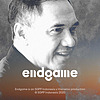
Fresh out of the studio, Horace Dediu, Founder of Asymco, joins us for the first of a three-part conversation on Apple's strategy as the AI era arrives. Horace argues that Apple is the last consumer company: only 15% of sales at the world's 20 largest companies go to consumers, and Apple accounts for half of that exposure. He explains why infrastructure builders, from railways to telephony, rarely profit, why Big Tech keeps failing at consumer devices, and how the Cook and Ternus doctrines differ. "There's never been more concentration in non-consumer market caps in history. All the largest market caps in the world today, if you add up the top 20, you get to something like, I believe, $33 to $34 trillion. How much of those sales are to consumers? It turns out only 15% of sales of the top 20 can be attributed directly to consumers. Apple is half of that. So therefore, if you believe consumers have anything to do with the future of AI, you have to own Apple." - Horace Dediu from Asymco Profile: Horace Dediu,…
Fresh out of the studio, Horace Dediu, Founder of Asymco, joins us for the first of a three-part conversation on Apple's strategy as the AI era arrives. Horace argues that Apple is the last consumer company: only 15% of sales at the world's 20 largest companies go to consumers, and Apple accounts for half of that exposure. He explains why infrastructure builders, from railways to telephony, rarely profit, why Big Tech keeps failing at consumer devices, and how the Cook and Ternus doctrines differ. "There's never been more concentration in non-consumer market caps in history. All the largest market caps in the world today, if you add up the top 20, you get to something like, I believe, $33 to $34 trillion. How much of those sales are to consumers? It turns out only 15% of sales of the top 20 can be attributed directly to consumers. Apple is half of that. So therefore, if you believe consumers have anything to do with the future of AI, you have to own Apple." - Horace Dediu from Asymco Profile: Horace Dediu,…
Fresh out of the studio, Horace Dediu, Founder of Asymco, joins us for the first of a three-part conversation on Apple's strategy as the AI era arrives. Horace argues that Apple is the last consumer company: only 15% of sales at the world's 20 largest companies go to consumers, and Apple accounts for half of that exposure. He explains why infrastructure builders, from railways to telephony, rarely profit, why Big Tech keeps failing at consumer devices, and how the Cook and Ternus doctrines differ. "There's never been more concentration in non-consumer market caps in history. All the largest market caps in the world today, if you add up the top 20, you get to something like, I believe, $33 to $34 trillion. How much of those sales are to consumers? It turns out only 15% of sales of the top 20 can be attributed directly to consumers. Apple is half of that. So therefore, if you believe consumers have anything to do with the future of AI, you have to own Apple." - Horace Dediu from Asymco Profile: Horace Dediu,…
Fresh out of the studio, this marks the 11th year of the e-Conomy SEA report with Nitin Gajria, Managing Director, Southeast Asia & South Asia Frontier Markets, Google; Florian Hoppe, Partner at Bain & Company; and Cassie Wu, Director of Investments, Asia Pacific (excluding China and India), Temasek. Generative AI reached 240 million users, or 60% of the working population, in three years — a milestone the Internet took ten years to hit. Yet per capita token usage is one-tenth of the US, with the gap almost entirely in enterprises outside Singapore and Malaysia. The panel shows AI-assisted shopping journeys lifting average order value by 75%, sets four tests for durable AI companies in Southeast Asia, and argues the region's diversity is its moat as Southeast Asia enters its AI decade. "62% of users in Southeast Asia feel more positively about AI this year than they did last year ... We're stepping into the AI decade for Southeast Asia. And we're just at the ground floor of that. So it's going to be…
Fresh out of the studio, Rui Ma, founder of TechBuzz China, returns to examine China's AI ecosystem on its own terms rather than as a horse race with Silicon Valley. She maps the atlas of China's AI labs by strategy, from DeepSeek's "cost curve rebels"; to the big-tech war over office agents, and explains why cheap intelligence comes from brutal domestic competition rather than an export plan. Rui Ma unpack why robotics enjoys a homegrown market that pure AI lacks, why robot hardware and software must co-evolve, and how China prices insurance for brain-computer interfaces before the devices ship. Last but not least, she shows how Chinese municipalities now act as startup service providers, raising the floor for everyone while letting markets pick the winners. "The [Chinese] government's not looking to build a multi-trillion dollar AI behemoth. The government is like, 'What is the best outcome for my society?'The best outcome is that the best technology survives. I don't want it to go bankrupt, right, and die…
Fresh out of the studio, Jon Russell from Asia Tech Review and executive director at Ellerton & Co., returns to trace how Chinese AI crossed from technological challenger into a commercial industry and a geopolitical export model. He unpacks the first public earnings from Z.ai and MiniMax, where revenue growth above 300% still cannot explain the valuations, and why cutthroat domestic competition makes international expansion existential for Chinese labs. Bernard and Jon examine the hidden on-premises market, the sovereignty stacks forming in Europe and Asia, why the copying narrative around distillation collapses under scrutiny, and China's remaining bottleneck in lithography. Jon closes on what he calls the dome: an AI ecosystem now self-sufficient from technology through to capital. "The really impressive thing isn't just that China's building its own tech stack. It's that—it's so integrated. Companies are going public, they're raising money. It's entirely self-sufficient from the technology to the…
Fresh out of the studio, Ang Li, CEO and co-founder of Simular and previously a research scientist at Google DeepMind, joins us to explore why computer use is the last mile to AGI. Ang traces his path from studying catastrophic forgetting and continual learning at DeepMind to founding a company on a single conviction: models break in production because the data distribution never stops moving, and the only place to close that loop is the real world. He explains why the chatbot metaphor misleads enterprise buyers, why the right unit of measurement is tokens per task rather than price per token, and how the power law of practice should make an agent cheaper every time it repeats the same work. He separates capability from reliability through pass@k and pass^k, argues that deterministic work belongs in code rather than in a model, and makes the case that frontier labs exist to sell tokens while Simular exists to remove them. Last but not least, Ang shares his test for AGI — one you feel rather than see — and…